Estuary Characterization
Intro Section
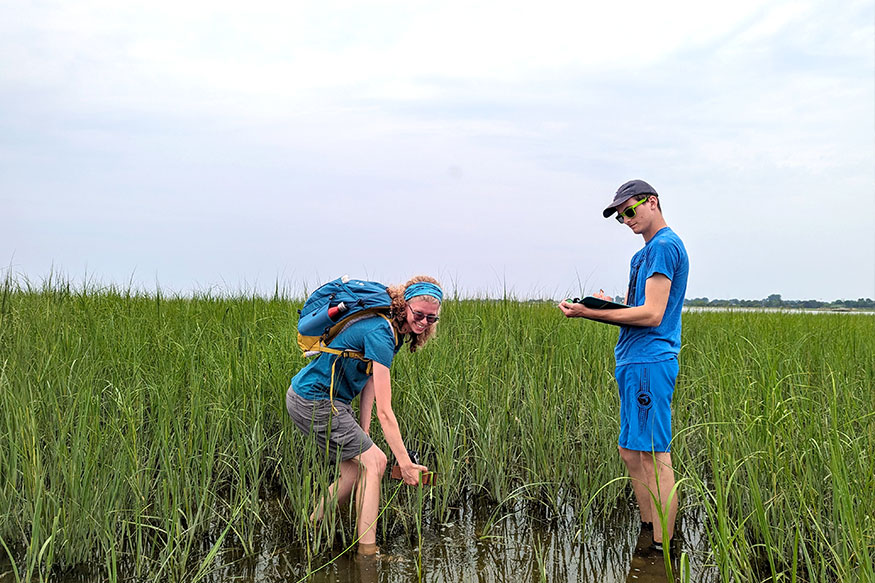
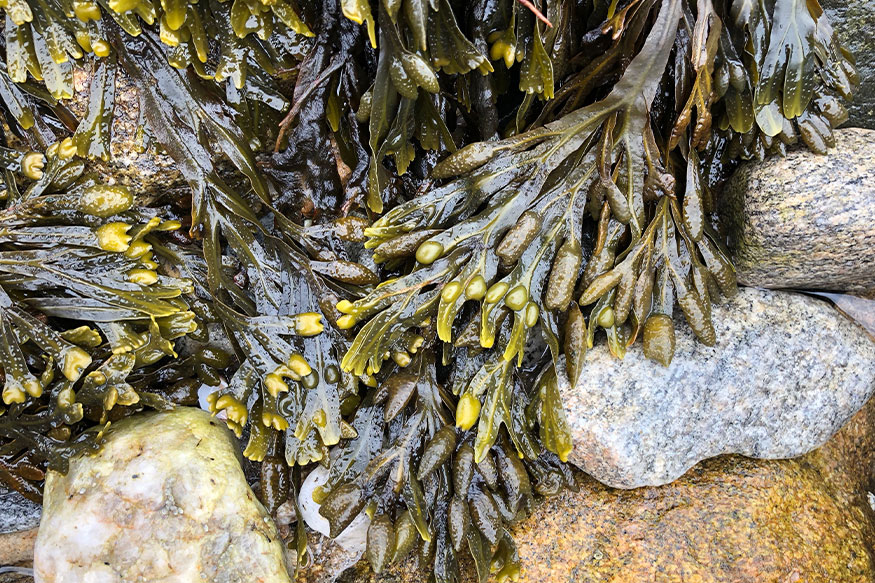
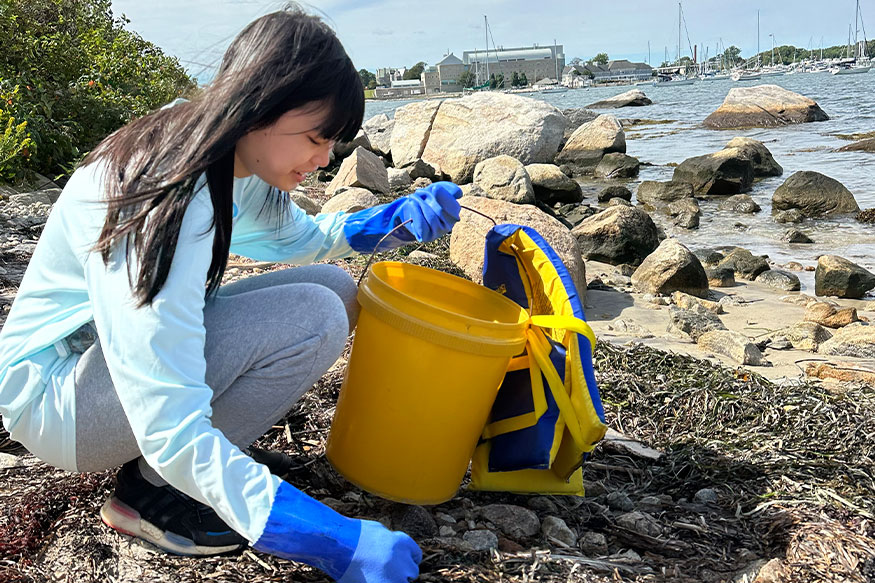
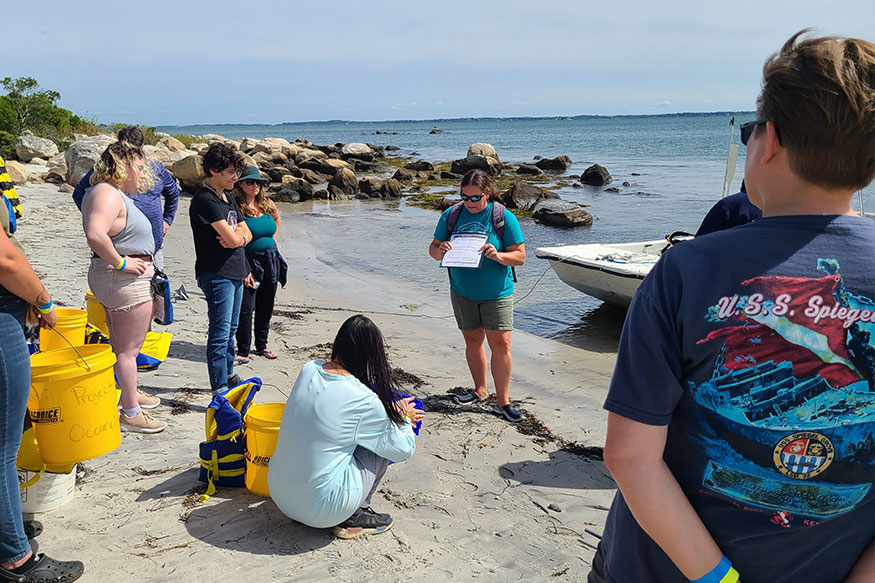
By the Numbers
52,160
area of the Reserve in acres
1,955
acres of land
50,205
acres of tidal rivers, embayments, and coastal marine waters
(((this is an infographic. Can have photo background or solid, can be full width, options to format text, heading, etc.)))
3.a. Environmental Setting
The Connecticut National Estuarine Research Reserve (CTNERR) encompasses a large and diverse mosaic of upland, freshwater, estuarine, and marine habitats located in southeastern Connecticut. The Reserve boundary includes approximately 52,160 acres, of which approximately 1,955 acres are landward components and approximately 50,205 acres consist of tidal rivers, embayments, and coastal marine waters.
The physical environment of the Reserve reflects the geological history, hydrology, and coastal processes of southern New England and provides the abiotic framework that shapes ecological patterns, biological communities, and human uses throughout the region.
3.a.i. Estuarine Geomorphology
Long Island Sound and Fishers Island Sound form a contiguous coastal plain estuary that is sheltered from the full force of the Atlantic Ocean by Long Island and Fishers Island, respectively. The Reserve lies within this protected system, characterized by semi‑enclosed waters, variable fetch, and strong tidal influence.
Based on National Estuarine Research Reserve System typologies and regional classifications, habitats within the CTNERR include developed areas associated with core facilities; shorelands such as maritime forests, shrublands, grasslands, and coastal bluffs; transitional habitats including tidal salt, brackish, and freshwater marshes; intertidal beaches, mudflats, and rocky intertidal zones; and subtidal hard and soft bottom habitats. ((((THIS REFERED TO FIG 5 “Map of the CTNERRS Upland Boundaries with identified land cover; A map of the CTNERR boundaries and their Land Cover created by CTNERR and UConn CLEAR.”)))
Many State of Connecticut‑defined Critical Habitats occur within the Reserve boundary, including beach shore, coastal grassland, coastal woodland/shrubland, intertidal marsh, floodplain forest, and poor fen. These habitats reflect the interaction of glacial geology, post‑glacial sea‑level rise, sediment distribution, and modern coastal processes.
The subtidal waters of the Reserve were designated to include a representative range of benthic habitats, including bedrock ledges, boulder and cobble fields, gravel zones, soft sediments, and areas mapped as submerged aquatic vegetation, spanning depths from nearshore waters to more than 150 feet ((((THIS REFERRED TO FIG 6 “Map of Reserve with Benthic Substrate Type; A map of the CTNERR boundaries and their benthic substrate created by CTNERR and UConn CLEAR.).”)))))
3.a.ii. Climate and Weather

Climate describes long‑term patterns in temperature, precipitation, and weather variability, while weather reflects short‑term atmospheric conditions. The coastal region of southeastern Connecticut is characterized by a temperate climate with maritime influence, resulting in hot, humid summers and generally mild to moderate winters.
Average monthly air temperatures range from winter lows in the 20s °F to summer highs exceeding 80 °F, with mean annual temperatures typically between the mid‑40s and low‑60s °F. Precipitation is relatively evenly distributed throughout the year, averaging approximately four inches per month. Average annual snowfall is approximately 24 inches, with the highest snowfall occurring in January and February.
Seasonal storms, including winter nor’easters and occasional tropical systems, strongly influence coastal processes, water levels, sediment transport, and shoreline dynamics within the Reserve.
3.a.iii. Hydrology and Oceanography

The hydrology of the CTNERR is shaped by the interaction of freshwater inflows, tidal exchange, and estuarine circulation. Two major rivers—the Connecticut River and the Thames River—provide the dominant sources of freshwater to the Reserve area, along with numerous smaller rivers, streams, and groundwater inputs.
The Connecticut River supplies the majority of freshwater entering Long Island Sound, while the Thames River contributes a smaller but still regionally significant flow. Landward Reserve components associated with the lower Connecticut River are dominated by tidal marshes with hydrology driven by both freshwater discharge and tidal exchange. In contrast, Bluff Point and Haley Farm State Park are primarily forested and experience less upstream freshwater input.
The aquatic portions of the Reserve experience a semi‑diurnal tidal cycle with two high tides and two low tides daily. Water temperatures typically range from near freezing in winter to the high‑60s °F in summer, moderated by tidal mixing and water depth. Salinity values across much of the Reserve average approximately 30–32 ppt near the bottom and 28–30 ppt near the surface, with strong horizontal and vertical gradients near river mouths.
Both the Connecticut and Thames Rivers exhibit salt‑wedge estuarine structure, with lower‑salinity surface waters overlying more saline bottom waters. Changes in freshwater discharge, sea‑level rise, and climate‑driven shifts in precipitation patterns have the potential to alter these circulation patterns and associated habitat conditions over time.
3.a.iv. Water Quality
Water quality within the CTNERR varies spatially, with more landward embayments and riverine areas exhibiting greater impairment relative to offshore waters of Long Island Sound and Fishers Island Sound, which benefit from greater exchange with the Atlantic Ocean.
Across the Reserve area, approximately 75 percent of waters are supportive of aquatic life, while a smaller proportion is currently classified as supportive of shellfishing. Recreational use is supported in many nearshore areas, although data gaps remain in deeper offshore waters.
Primary water quality stressors include nutrient enrichment—particularly nitrogen from wastewater, septic systems, atmospheric deposition, and fertilizers—along with sediment loading, bacterial contamination, and emerging contaminants. Indicators of water quality impairment include elevated nutrient concentrations, phytoplankton and macroalgal blooms, reduced dissolved oxygen levels, increased turbidity, and elevated fecal indicator bacteria.
Eastern portions of the Reserve support submerged aquatic vegetation, including eelgrass, which serves as an indicator of relatively good water quality. Threats to water quality include ongoing nutrient inputs, rising water temperatures, stormwater runoff associated with coastal development, and short‑term impacts related to dredging and boating activity.
3.b. SocioEcological Setting
((((intro/background text)))
3.b.i. Demographics and population trends of Reserve connected communities
(((TEXT – nothing in doc)))
3.b.ii. Subsistence, commercial and recreational activities and related significant species, ecosystems and locations
(((TEXT – nothing in doc)))
3.b.iii. Culturally significant sites and human dimensions within the Reserve
(((TEXT – nothing in doc)))
3.c. Biological Communities and Biocultural Indicators
The Connecticut National Estuarine Research Reserve (CTNERR) encompasses a wide array of biological communities that reflect the physical, hydrological, and climatic gradients of southeastern Connecticut and Long Island Sound. These communities occur across upland, freshwater, estuarine, and marine environments and support high biodiversity, regionally significant habitats, and critical ecosystem services.
The biological communities within the CTNERR are shaped by long‑term natural processes, such as glacial history and estuarine circulation, as well as by centuries of human influence, including land use change, resource extraction, and ecological management. This section characterizes the major biological components of the Reserve and provides context for research, monitoring, stewardship, and education activities described in subsequent sections.
3.c.i. Biotic Habitats and Ecosystem Engineers
The CTNERR includes several habitat‑forming biological communities that serve as ecosystem engineers, modifying physical conditions and influencing the distribution and abundance of other organisms. These habitats include:
- Seagrass meadows
- Shellfish beds
- Salt, brackish, and freshwater marshes
- Floodplains and riparian corridors
- Forests, shrublands, and grasslands
These communities provide nursery habitat, food resources, and shelter for a wide range of organisms, including ecologically and economically important fish and invertebrate species. As structural habitats, they stabilize sediments, attenuate wave energy, improve water quality, and contribute to coastal resilience.
3.c.ii. Microbiological Communities
Microbial communities play a foundational role in ecosystem function throughout the CTNERR. Microorganisms drive nutrient cycling, organic matter decomposition, oxygen dynamics, and biogeochemical processes across aquatic and terrestrial environments.
Within estuarine and freshwater systems, microbial activity influences nitrogen transformation, carbon cycling, and sediment chemistry, thereby affecting water quality and habitat suitability. Some microbial indicators also serve as proxies for human health risk, particularly fecal indicator bacteria (FIB), which are monitored to assess potential contamination.
The CTNERR participates in coordinated monitoring efforts to track microbial indicators, contributing data that support water quality assessment, public health protection, and management decision‑making.
3.c.iii. Plankton Communities
Plankton communities form the base of aquatic food webs within the CTNERR. Phytoplankton are responsible for much of the system’s primary production and nutrient uptake, while zooplankton link primary producers to higher trophic levels.
Phytoplankton and zooplankton communities exhibit strong seasonal patterns influenced by temperature, nutrient availability, light, and hydrodynamics. Changes in plankton composition and abundance can signal shifts in water quality, eutrophication, or climate‑driven change. Certain phytoplankton species may form harmful or nuisance blooms that negatively impact ecosystems, fisheries, and recreation.
Although plankton communities are not fully characterized at all Reserve locations, regional monitoring efforts provide context for understanding plankton dynamics within CTNERR waters.
3.c.iv. Vegetation Communities
Terrestrial Vegetation
Terrestrial vegetation within the CTNERR spans forests, shrublands, grasslands, dunes, and bluffs. These communities provide habitat for wildlife, stabilize soils, regulate hydrology, and contribute organic matter to adjacent aquatic systems.
Forested habitats dominate several Reserve sites and are characterized by mixed hardwood species, including oak, hickory, maple, birch, and cherry. Shrublands and grasslands provide important habitat for birds, insects, and small mammals, while beach and dune vegetation plays a critical role in shoreline stabilization.
Invasive plant species are present across many terrestrial habitats and represent a major management concern. Invasive species can alter community composition, reduce native biodiversity, and change ecosystem processes.
Riparian and Freshwater Vegetation
Riparian and freshwater vegetation occurs along rivers, streams, and wetlands within the CTNERR. These communities include floodplain forests, freshwater marshes, tidal freshwater flats, and submerged aquatic vegetation beds.
These habitats serve as ecological linkages between uplands and aquatic systems, filtering nutrients, attenuating floodwaters, and providing habitat for amphibians, fish, birds, and invertebrates. Rare wetland types, such as fens, are present in portions of the Reserve and support specialized plant assemblages.
Freshwater invasive plants, including aquatic macrophytes, pose ongoing management challenges by altering flow, shading native vegetation, and reducing habitat quality.
Estuarine and Marine Vegetation
Estuarine and marine vegetation within the CTNERR includes salt and brackish marsh plants, macroalgae, and seagrasses. Salt marshes and seagrass meadows are among the most productive habitats in Long Island Sound, supporting high secondary production and extensive food webs.
Eelgrass (Zostera marina) is of particular ecological significance, providing habitat for fish and invertebrates, stabilizing sediments, and improving water quality. Eelgrass distribution within the Reserve reflects water clarity, nutrient loading, and physical conditions, making it a valuable indicator of estuarine health. Macroalgal communities occupy intertidal and subtidal substrates and contribute to primary production, nutrient cycling, and habitat complexity
3.c.v. Invertebrate Communities
Invertebrates constitute a large and diverse component of the CTNERR’s biological communities and occupy habitats ranging from soils and wetlands to intertidal flats and offshore waters. These organisms perform essential ecological functions, including filtration, decomposition, nutrient cycling, and trophic transfer.
Marine and estuarine invertebrates include mollusks, crustaceans, echinoderms, annelids, and cnidarians. Many species are ecologically important or support recreational and commercial fisheries, such as oysters, quahogs, scallops, and lobsters.
Some nonindigenous and invasive invertebrate species are present in the region and may alter community structure or compete with native species. Monitoring and management efforts aim to track the occurrence and impacts of these species.
3.c.vi. Fish, Reptiles, and Amphibians
The CTNERR supports a diverse assemblage of fishes, including freshwater, estuarine, diadromous, and marine species. The Connecticut River system, in particular, provides critical migration corridors, spawning habitat, and nursery areas for numerous species.
Fish communities within the Reserve include forage species, predators, and species of conservation concern. Diadromous species such as shad, river herring, eels, and sturgeon highlight the ecological connectivity between riverine and marine systems.
Reptiles and amphibians occupy terrestrial, freshwater, and wetland habitats throughout the Reserve. Many species are sensitive to habitat loss, water quality, and climate change, making them valuable indicators of ecosystem condition.
3.c.vii. Birds and Mammals
Birds and mammals within the CTNERR benefit from the proximity and diversity of habitats present across uplands, wetlands, and coastal waters. The region supports resident species as well as migratory and overwintering populations.
Salt marshes, tidal flats, and nearshore waters provide important habitat for shorebirds, waterfowl, and raptors, while forests and shrublands support a wide range of songbirds and mammals. Several species present within the Reserve are recognized as conservation priorities at the state or federal level.
3.d. Ecological Setting and Conditions
(((intro/background text)))
3.d.i. Origin and Evolution of the Estuary
The area of Long Island Sound and Fishers Island Sound and the neighboring islands (including Long Island) were shaped by the Wisconsin Glaciation Episode, when the Laurentide ice sheet covered New England, 25,000 years ago (Lynch 2017). This glacial epoch started about 85,000 years ago, reached its peak 25,000 years ago, and ended for Connecticut’s coastline about 16,500 years ago. The terminal moraine of the glacier, or the point of farthest advance of the ice sheet, can be seen in the huge pile of boulders, rocks, and sand that form the central spine of Long Island, stretch along the south fork, and extend eastward to Block Island and beyond. As the glacier was retreating from the terminal moraine, a cooling period resulted in the stalling of withdrawal and the formation of a recessional moraine, running along the north shore of Long Island, Orient Point, Fishers Island, and the current coastline of Rhode Island. Additional recessional moraines are evident in coastal Connecticut, stretching west to east just north of the I-95 corridor, the Norwalk Islands-Old Saybrook moraine (approximately 20,300 years ago) and the Hammonasett-Ledyard Moraine (approximately 20,200 years ago). Glacial Park in Ledyard provides a chance to walk through history, in the form of a glacial boulder train located in an immense kettle hole. [JP32.1][JP32.2][JP32.3]
As the glacier was retreating (approximately 20,300 years ago), Glacial Lake Connecticut formed within the approximate footprint of today’s Long Island Sound (Lynch 2017). Sea level was 300 feet lower and the Atlantic coast was approximately 75 miles to the south. While sea levels were rising, the glacial meltwater was slowing as the glacier retreated northward. By approximately 17,900 years ago, Glacial Lake Connecticut had largely drained to the Atlantic, leaving Long Island Sound a relatively dry basin. The history of glaciation in the region resulted in the removal of fine silt and sediment from the watershed, carried away to the depths of current-day Long Island Sound and out to the Atlantic Ocean. This scouring of sediments from the land left behind rock and cobble, leaving most of Connecticut poor land for farming.
Climate continued to warm and sea level continued to rise during the Early Archaic period. Long Island Sound was now an estuary, albeit with a smaller footprint as sea levels were still lower than today. Between 10,000 B.P. and 8,900 B.P., vegetation shifted to white pine, yellow birch, grey birch, and oak; as spruce, fir, and larch were pushed out by the drier, warmer climate (Lavin 2013). These new forests supported a new suite of game, including white-tailed deer, moose, elk, black bear, wolf, fox, lynx, marten, wolverine, turkey, migratory birds, fish, turtles, and freshwater mussels (Lavin 2013).
3.d ii. Influence of Physical Environment on the Biota
The reserve area has a diverse physical environment that affects the biotic factors present in the reserve. Some of the abiotic factors influencing the biota include soil types, salinity, climate and hydrology. In aquatic environments, salinity, benthic sediment and hydrology affect the organisms found there. The salinity within the reserve’s boundaries range from 0 ppt in upstream regions and averaging 30-32 ppt at the bottom and 28-30 ppt at the surface in the long island sound (NOAA 2025b). This gradient can be seen in the ecological composition as salinity increases. In upstream regions, freshwater plants and organisms are present. While downstream, in more brackish water, both freshwater and marine plants are found. Within Long Island Sound, there are mainly salt tolerant and marine plants. Benthic sediment dictates the macrophytes and organisms present in the ecosystem. Benthic sediments can range from silt to gravel (Figure 6). Gravel and rocky benthic zones often lack macrophytes with root systems. While eelgrass and other seagrasses often grow in silty or sandy sediments. The LIS has a wide range of temperatures averaging from 32°F in the winter and 68°F in the summer (NOAA 2025a). Meaning organisms and plants must be tolerant to a wide range of temperatures or migrate during parts of the year. Some examples of migratory fish found in LIS are Atlantic salmon, American shad, and striped bass. The types of macrophytes and marine vegetation affect the ecology of the surrounding ecosystem. Fiddler crabs, mussels and juvenile fish can often be found in saltmarshes, while sea stars, barnacles and whelks can be found in the rocky tidal and bivalves, juvenile fish and tunicates can be found in seagrass meadows.
In terrestrial environments climate and soil types, water availability, and pH can affect the organisms present there.[JP1] Connecticut has a subtropical or temperature climate with wide range of temperatures and a variety of weather conditions. Summers are hot and humid, and winters are moderate with a mix of rain and snow (snowfall averages about 24 in per year. Temperature ranges from low 20°F to above 80°F with averages around 40°F to 60°F. Connecticut (NOAA 2025a). Connecticut experiences consistent rainfall year-round and experiences seasonal storms. Organisms must be able to tolerate a variety of temperatures or migrate seasonally. Plants growing in Connecticut should be frost resistant. Some examples of Connecticut’s migratory populations can be found in Table 13. Terrestrial soil types can affect the plants grown in the area. Within the reserve boundary there are soil types ranging from boulders to peat to sandy (Figure 11). Peat or marsh is highly organic, but often waterlogged, so water tolerant marsh plants will grow best. Droughts are not common in Connecticut, so drought tolerant plants will be out competed and are rare. Soil pH also affects the plants grown, Connecticut’s soil has a pH range of 4.5 to 5.5 (Connecticut Invasive Plant Working Group 2023), more acidic soils have a lower nutrient concentration. Therefore, surrounding plants must be able to absorb and retain the necessary nutrients from the soil. The types of vegetation effects the ecology of the surrounding ecosystem.
(((Figures of soil and geology maps – Figure 11; CTNERR soil type map- A map showing the upland boundaries of CTNERR (light orange) over soil types. A is the UConn Avery Point Campus, B is Bluff Point, C is Haley Farms, D is DEEP Marine District Headquarters and Roger Tory Peterson Natural Area Preserve, and e is Lord Cove Natural Area Preserve.)))
3.d iii. Biological Productivity
Within the Reserve boundaries there are several sources of biological productivity terrestrial, aquatic and marine. Terrestrial biological productivity varies across habitats (Table 7); these habitats can include forests, shrublands, grasslands, marshes and fens. Marine ecosystems contain both unicellular and macroalgae (Table 8) biological activity, with both photosynthesis and chemosynthesis.
3.d iv. Community Structure and Processes
The ecological community and processes within the reserve varies based on the environment. The habitats within the reserve boundary are outlined in section 1.b.ii. Estuarine/Terrestrial habitats Across aquatic habitats trophic pathways follow similar patterns, supported by macroalgae or plankton. A majority of the community structure and process of the reserve is threatened by anthropogenic activities. These threats include hypoxia, invasive species, Ocean Acidification, temperature extremes in winter and summer months and overfishing. The reserve helps to research and monitor these threats within Long Island Sounds.
Saltmarshes are the most productive habitats within LIS with two major energy pathways. One starts with phytoplankton and benthic algae being consumed by suspension and deposit feeders. The other is detrital, starting with Spartina spp. dying and decomposition aided by the microbial communities, then eaten by deposit feeders. Salt Marshes are highly zoned that are defined by species present and controlled by stressors (ex; tidal flooding, salt stress, physical disturbances and competition). Marshes provide several ecological services. Marshes provide protection and food for killifish during high tide, habitat for birds, hatcheries and refuge for migrating fish (Latimer et al. 2014).
The reserve helps to restore previous damaged ecosystems with living shoreline projects (outlined in section 2.a.ii and 2.a.iii). The reefballs at Connecticut College marsh are one of the CTNERR’s restoration efforts. The Connecticut College was experiencing high erosion and threatened the fringing marsh on the edge of the Connecticut College campus. Erosion is driven by increased wave action (from activity on the Thames River) and railroad activity. Reefballs disperse wave energy and allow sediment to collect. The increased sediment accretion promotes natural marsh growth. The reef balls mimic natural habitats for crabs, fish and other marine life. Since the installation of the reef balls, several summer interns have examined biodiversity of reefball sites and local marshes (table 14).
One of LIS’s most important habitats is eelgrass, it provides habitats for marine creatures and acts as a water quality indicator. Current research at the CTNERR is focused on the community structure between eelgrass and oyster farming aquaculture. Previous research on eelgrass includes EHSI which models where eel restoration will be successful. This model will help with registration of the elaboration. The CTNERR formed the LIS Eelgrass Collaborative (funded by Long Island Sound Study) to begin aspects of the Long Island Sound Eelgrass Management and Restoration Strategy. The Long Island Sound Eelgrass Management and Restoration Strategy is a guide for short-term and long-term actions to restore and maintain eelgrass meadows (CTNERR 2023). The goals of the collaborative are:
- Identify management and regulatory barriers and recommendations for eelgrass restoration,
- Coordinate with other regional efforts to understand interactions between eelgrass and aquaculture,
- Provide input on other LISS funded eelgrass projects, and
- Improve bi-state collaboration by sharing information, identifying research gaps, funding opportunities and networking.
The CTNERR hopes in the future to help with eelgrass restoration by beginning an eelgrass seed bank. The Reserve is also researching interactions between eelgrass and oyster aquaculture. Oysters use calcium carbonate to build their shells and as ocean acidification worsens there is less calcium carbonate available in the water. Eelgrass is considered a carbon sink, which would allow for more calcium carbonate in the water column. The research also looks at the eelgrass’s effect on water quality for oysters. The reserve is look at water quality and carbonate chemistry around eelgrass beds with oyster cages, only eelgrass beds, only oyster cages and bare sediment. In the future, the NERR plans to research how ocean acidification impacts this research.